



How to Store Books So They Come Out the Way They Went In


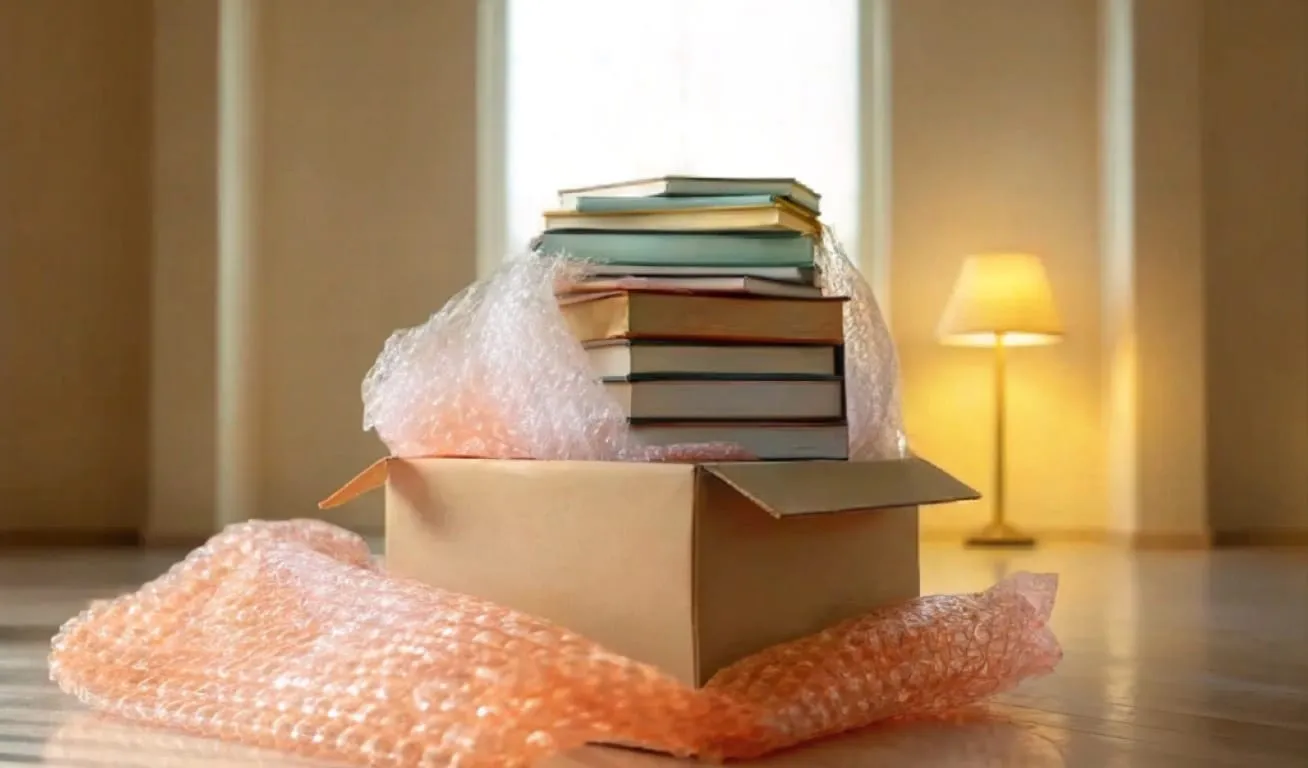
Books are tougher than they look and more fragile than people treat them. Paper survives centuries in the right room and a single winter in the wrong one. Whether you are boxing up a few shelves for a move or putting a whole library away for a couple of years, the method is the same: clean, dry, packed so nothing bends, and kept somewhere that is boring.
Key takeaways
- Damp is the enemy, then light, then heat. Books want a cool, dark room with steady humidity, off the floor and away from outside walls.
- Small boxes only: 15 to 20 kg is the limit. Pack books flat in stacks or standing spine-down, never spine-up, and fill gaps so nothing shifts.
- Lidded plastic boxes beat cardboard for anything longer than a few months. Never sealed plastic bags.
- Wrap valuable books and dust jackets in acid-free tissue. Newspaper, coloured tissue and rubber bands all leave marks.
- Check once a year for damp, insects and smell. Books that go in dry and stay dry come out unchanged after years.
What actually damages books in storage
- Moisture. Above about 60% humidity, mould grows on paper and cloth and pages develop foxing (the brown spots). Below 30%, paper and leather dry out and crack. Damp is by far the most common cause of storage damage.
- Light. Sunlight and fluorescent light fade spines and yellow pages. Boxes solve this; open shelving in a bright room does not.
- Heat and temperature swings. Heat speeds up the acid reactions that yellow paper; swings cause condensation. Lofts and garages do both.
- Pests. Silverfish, booklice and beetles eat glue, paste and paper. They come with damp and with food traces, so clean books in a dry room rarely see them.
- Weight and position. Books stored spine-up or leaning warp. Heavy books upright sag. Overfilled large boxes crush whatever is at the bottom.
How to store books, step by step
- 1
Sort, and be honest about the pile
Keep, sell, donate. A box of books you will never open costs the same to store as a box you love. Separate anything valuable, signed or sentimental; those get the archival treatment in step 5. - 2
Dust each book and check for damp
Hold the book closed and brush the top edge with a soft, dry paintbrush or microfibre cloth, away from the spine. Open a few pages and smell: a musty smell or spotting means the book is already damp and should dry fanned open in a warm room for a few days before it goes near a box. Look for tiny holes or silvery trails, the signs of insects; keep any affected book separate. - 3
Choose small, strong boxes
A small removal box (roughly 30 × 30 × 40 cm) full of books weighs 15 to 20 kg, which is the sensible limit for lifting and for the box itself. Double-walled cardboard is fine for a move or a season; for anything longer, use lidded plastic boxes, which keep out damp and insects. Line either with acid-free paper or a clean cotton sheet. - 4
Pack flat or spine-down, never spine-up
Lay books flat in stacks, largest at the bottom, or stand them upright with the spine down on the base of the box. Spine-up puts the weight of the text block on the binding and pulls it away from the cover over time. Pack similar sizes together so the stacks are level, and fill gaps with crumpled acid-free paper so nothing slides when the box is carried. - 5
Wrap anything valuable
First editions, signed copies, leather bindings and anything with a dust jacket you care about: wrap in acid-free tissue paper, then in a sheet of clean paper or a clear archival cover. No newspaper (the ink transfers), no coloured tissue (the dye runs), no rubber bands or tape on the book itself. - 6
Label and list
Write the contents on two sides of the box, and keep a list on your phone. “Books 12” is not a label; “Fiction A–H, hardbacks” is. If a box has anything valuable in it, note it. - 7
Store off the floor, away from outside walls, and check yearly
Boxes on a shelf, pallet or another box, never directly on concrete. Leave a gap from external walls, radiators and pipes. Once a year, open a box or two, smell, look, and if everything is fine, close it again. That is the whole maintenance.
Hardbacks, paperbacks, art books, comics
| Type | Position | Notes |
|---|---|---|
| Hardbacks with dust jackets | Flat or spine-down | Wrap the jacket in acid-free tissue or a clear archival cover; the jacket is half the value |
| Paperbacks | Spine-down, snug | Pack tightly so the spines cannot curl; they warp faster than hardbacks |
| Large art books, atlases | Flat, on top | Never upright long term; the text block sags away from the spine |
| Leather-bound and antiquarian | Flat, wrapped | Acid-free tissue, no rubber bands or tape; stable humidity matters most |
| Comics and magazines | Upright in bags with boards | Archival (Mylar/polypropylene) bags and acid-free backing boards, in a short box |
| Children's board and picture books | Flat or spine-down | Wipe covers first; food traces attract insects |
The right room: temperature, humidity, light
Archives aim for around 16 to 20 °C and 35 to 55% relative humidity, and above all for steadiness. You do not need a hygrometer for a few boxes; you need a room that is heated in winter, does not get the afternoon sun, and does not have a damp wall. A spare bedroom, an internal cupboard or a dry indoor warehouse all qualify. A loft, garage, shed, cellar or conservatory does not.
If your only space is borderline, a lidded plastic box with a couple of silica gel sachets inside and the box raised off the floor gets you most of the way there. Replace the sachets when you do the yearly check.
Do
- Small boxes, packed full and level
- Flat stacks or spine-down
- Acid-free tissue around anything valuable
- Off the floor, away from outside walls, in the dark
Don’t
- Spine-up, leaning or in half-empty boxes
- Sealed plastic bags or airtight lids
- Newspaper, coloured tissue, rubber bands, tape
- Lofts, garages, cellars, or against a radiator
Shelves full? We collect the boxes, store them dry, and deliver the ones you want
How long can books stay in storage?
Indefinitely, if the room is right. Books stored dry, dark and cool are unchanged after five or ten years; libraries keep them for centuries in exactly those conditions. Paperbacks yellow slowly whatever you do, because the paper is acidic to begin with, but the rate is set by heat and light, both of which a box in a cool room removes.
Taking them out
Unpack in a dry room. If a box smells musty, stand the books fanned open for a day or two and brush any surface mould off outdoors with a soft brush. Stand hardbacks upright on a shelf and let them settle for a few days before putting anything heavy next to them.
Storing books by the box, with collection
Books are the one thing where storage per box is a genuinely good deal, because a box of books is small and heavy: it costs the same to store as a box of cushions and holds fifty times the value. Stackt prices storage per box, collects from your door, stores in a dry London warehouse and delivers back the boxes you ask for. Each box is photographed and listed in your account, so you can call back “Fiction A–H” and leave the rest.
Packing books for a move rather than storage? Our packing books guide covers the moving day. For furniture, appliances and everything else, see how to store furniture long term.
Storing books: your questions
Should books be stored flat or upright?
In a box, flat in stacks or standing spine-down, never spine-up. On a shelf, upright and snug, with a bookend so they do not lean. Very large or heavy books (atlases, art books) should always lie flat, ideally on top of the stack, because upright the weight of the pages pulls the text block away from the spine.
What is the best temperature and humidity for storing books?
Cool, dry and steady: roughly 16 to 20 °C and 35 to 55% relative humidity, which is what most archives aim for. Steadiness matters more than the exact number; a room that swings from damp to dry every day does more harm than one that is slightly humid all year. That is why lofts, garages and cellars are the wrong places.
Can you store books in plastic boxes?
Yes, and for anything longer than a few months lidded plastic boxes are better than cardboard: they keep out damp, dust and silverfish. Make sure the books are completely dry going in, do not seal the lid airtight, and line the box with acid-free paper so pages are not against the plastic. Never store books in sealed plastic bags.
How do I stop books going mouldy in storage?
Dry storage, air movement and a check once a year. Mould needs moisture, so keep boxes off concrete floors, away from outside walls, and out of unheated spaces. If you find musty-smelling or spotted books, take them into a dry room, stand them fanned open, and brush spores off outdoors with a soft brush; do not wipe damp mould into the paper.
How heavy should a box of books be?
No more than about 15 to 20 kg, which is roughly a small removal box (around 30 to 40 cm) filled. Books are the densest thing most people move; a large box of them is unliftable and the bottom gives way. Small boxes, filled fully so nothing shifts, are the rule.
How much does it cost to store boxes of books with Stackt?
Boxes are priced individually per week, from £1.92/week for a small box on a 6+ month term, so a hundred books in six small boxes costs less than a coffee a week. We collect from your door and deliver back the boxes you ask for.


